Light Beam Puzzles Explained: Mirrors, Splitters and Colour Mixing
How do mirror and laser puzzles work, and why do they train your brain so well? A friendly guide to reflections, beam splitting and mixing coloured light.
Few puzzles feel as magical as the moment a beam of light bounces off the last mirror and lights up its target. Light beam puzzles are a small but brilliant family of brain games. They are easy to understand, because everyone knows that mirrors reflect light, but they quickly become deep, because every mirror you turn changes the path of everything after it. This guide explains the ideas behind them and how to get better at solving them.
The basic rule: light travels in straight lines
Every beam puzzle starts from one simple fact. Light travels in a straight line until something changes its direction. In games, that "something" is usually a mirror, a wall or a special tile. A mirror set at an angle turns the beam by ninety degrees, so a beam travelling right can be sent up or down instead.
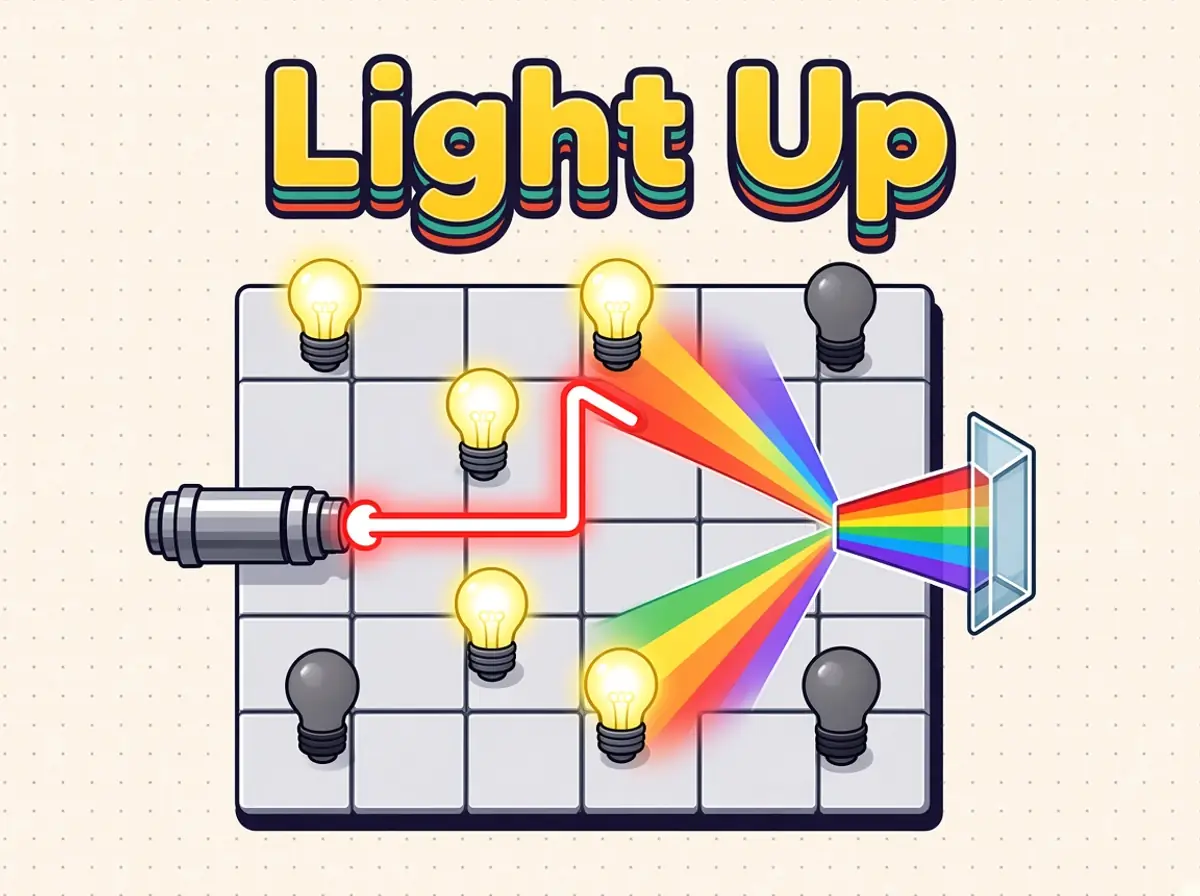
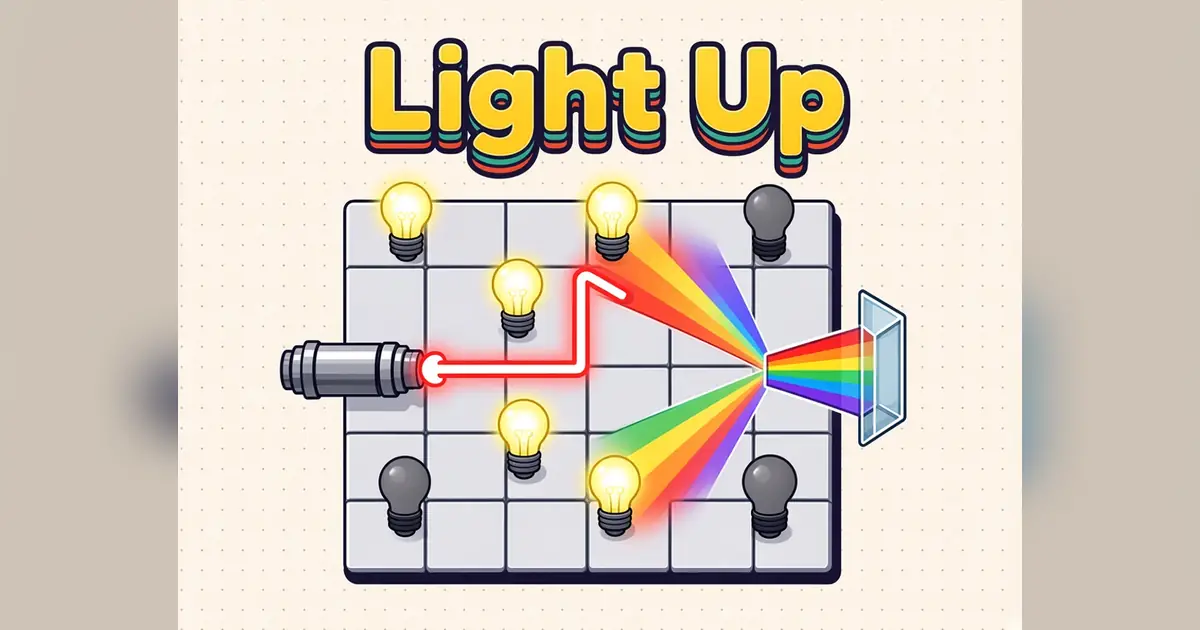
In Light Up, lamps fire coloured beams across a dark board, and you tap mirrors to turn them a quarter turn at a time. Your goal is to steer each beam so that every bulb receives light of exactly its own colour.
Idea 1: Work backwards from the target
The most useful trick in any beam puzzle is to start at the end. Look at a bulb and ask: from which direction must the light arrive? Then look one step back: which mirror could send light in that direction? Tracing the path backwards from the target usually reveals the solution much faster than trying mirror positions at random from the lamp.
Idea 2: Splitting one beam into two
Some puzzles add glass splitters. A splitter lets part of the beam continue straight while sending another part off at a right angle. Suddenly one lamp can light two targets. Splitters make puzzles richer, because you must now plan two paths at once and make sure neither one ends up somewhere it should not.
Idea 3: Mixing coloured light
Coloured light mixes differently from paint. With light, the primary colours are red, green and blue, and combining them makes brighter colours, not darker ones:
- Red + green = yellow
- Red + blue = magenta
- Green + blue = cyan
- Red + green + blue = white
Light Up uses this idea. A yellow bulb, for example, might need a red beam and a green beam to meet on it. Filters work the other way: they tint white light into a single colour. Once you know the mixing rules, you can work out which beams a bulb needs just by looking at its colour.
Idea 4: Wrong light counts against you
In many beam puzzles, it is not enough for light to reach a target. It has to be the right light. A beam of the wrong colour hitting a bulb does not count, and stray beams can spoil an otherwise good solution. Keeping track of where every beam ends up, not just the one you are working on, is an important habit.
Idea 5: Gates, keys and moving parts
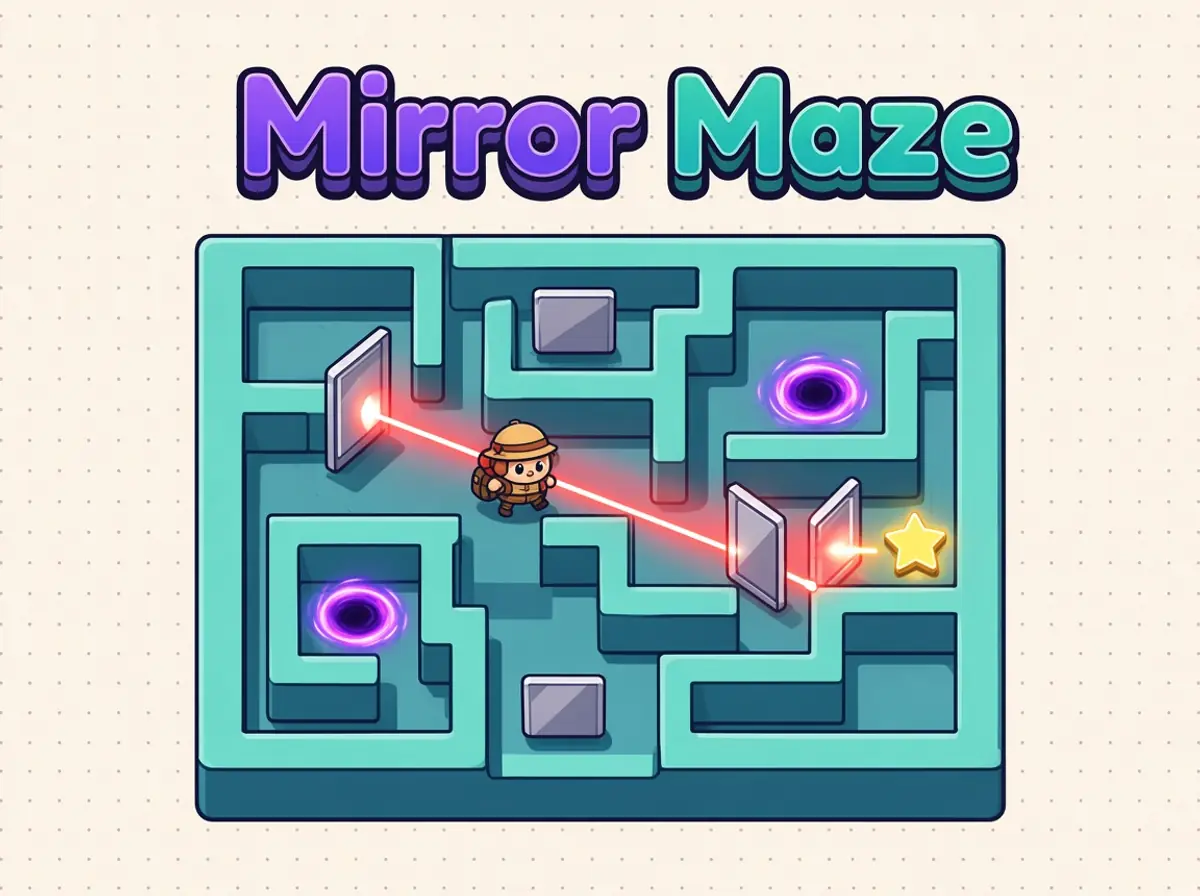
Advanced puzzles link beams to other parts of the board. In Light Up, locked gates stay shut until their key bulb is lit with the matching colour. In Mirror Maze, you walk a small robot through laser mazes, turning mirrors to bend deadly beams away from your path or onto sensors that open sliding gates. Here the beams are both a tool and a danger, and some turrets pulse on and off, so timing matters too.
Why beam puzzles are great brain training
Beam puzzles exercise several thinking skills at once:
- Spatial reasoning: imagining how a path will travel across the board before you make the move.
- Planning: working backwards from a goal and breaking a big problem into smaller steps.
- Cause and effect: understanding that one change can affect many things further along the path.
- Working memory: holding several beams and colour rules in your head at the same time.
These are the same skills people use when planning routes, solving maths problems or debugging code, which is one reason puzzle fans find these games so satisfying.
Tips for solving faster
- Trace each target backwards to find the direction its light must arrive from.
- Solve the most constrained bulb first, the one with only one possible path.
- Learn the colour mixing rules by heart.
- After each move, check where every beam ends, not just the one you changed.
- Use as few turns as possible. Light Up gives three stars for meeting the target number of taps.
A cousin of beam puzzles
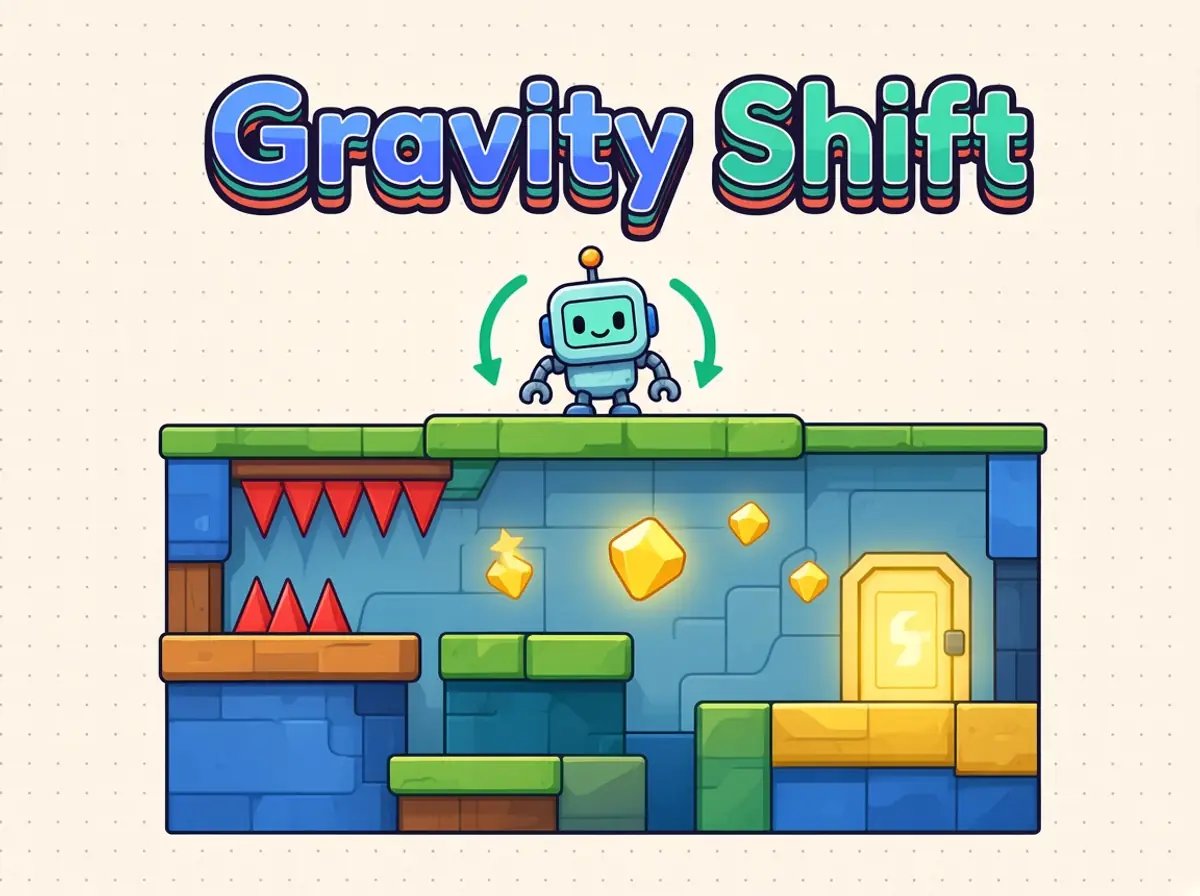
If you like the "every move travels until it stops" feeling of beam puzzles, try Gravity Shift. Instead of steering light, you change the direction of gravity, and your ball slides until something stops it. The same backwards planning works beautifully there too.
Final thoughts
Light beam puzzles turn simple physics into elegant logic. Remember that light travels straight, work backwards from each target and learn how colours combine, and you will start spotting solutions in seconds. Find more games that exercise your thinking in our Brain games category.