How to Improve Your Puzzle-Solving Skills
Good puzzle solvers are made, not born. These practical techniques help you break down hard levels, spot patterns faster and stay calm when stuck.
Some people seem to solve puzzles effortlessly. The good news is that most of that skill comes from habits you can learn. Whether you enjoy mazes, colour puzzles or line drawings, these techniques will help you solve faster and enjoy it more.
Understand the rules completely
Many "impossible" levels are really a misunderstood rule. Before starting a new type of puzzle, make sure you know exactly what is allowed. Can you undo? Do pieces wrap around the edges? Does every cell need to be used? Every game page on CrazyFunPlay has a "How to play" section for exactly this reason.
Start with what is certain
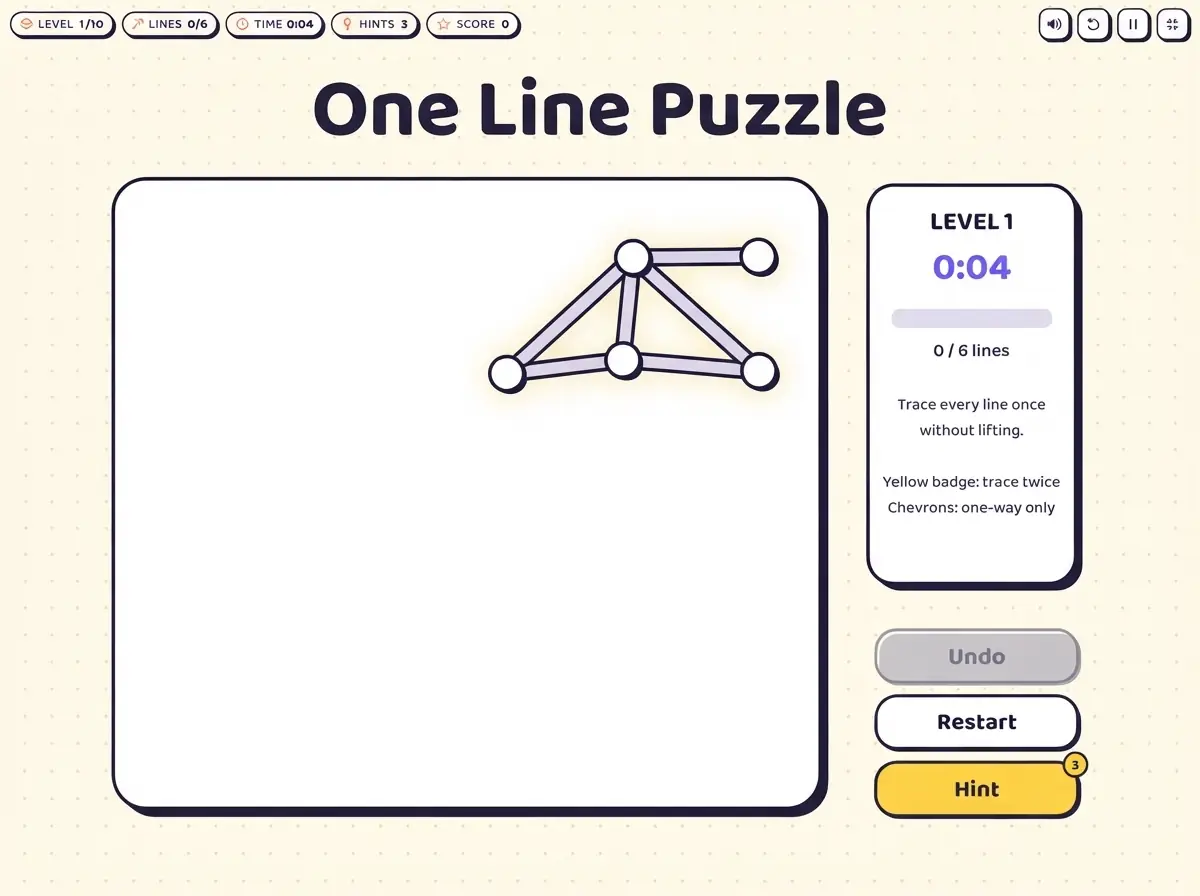
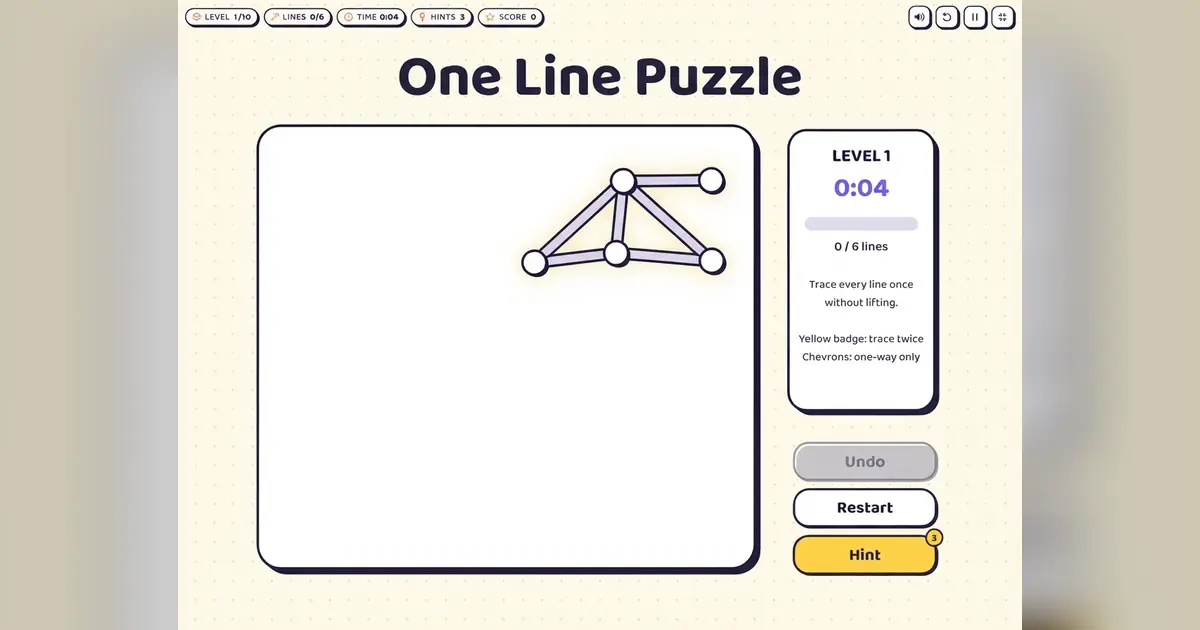
Strong solvers begin with the moves they are sure about, not the ones they are guessing. In a one-stroke drawing puzzle like One Line, for example, you can often tell where the line must start: points with an odd number of connections have to be the start or the end. Locking in certain facts first shrinks the problem.
Work backwards
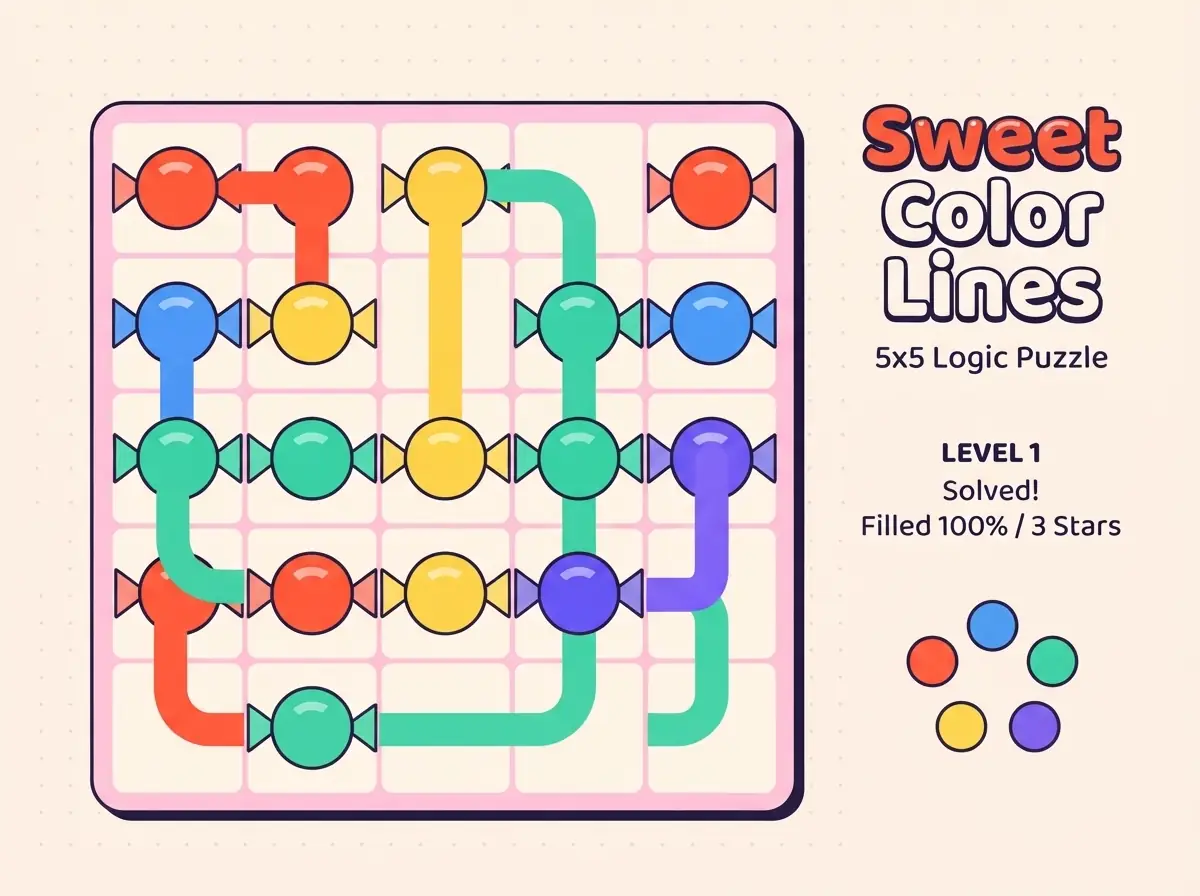
When the start is unclear, try the end. In a connect-the-pairs puzzle such as Sweet Color Lines, tracing a route back from the second candy often reveals the correct path faster than pushing forward from the first. Many puzzles are designed to feel tricky going forwards and much easier in reverse.
Break the puzzle into parts
A big board is overwhelming. A small corner is not. Try to find a section that can be solved on its own, finish it, and move on. In sorting puzzles such as Water Sort Online, completing one colour at a time keeps things manageable.
Look for patterns you have seen before
Puzzle designers reuse ideas. After a few levels, you will start recognising shapes, traps and tricks. When a new level feels familiar, ask yourself what worked last time. This pattern memory is one of the biggest differences between beginners and experienced players.
Take a short break when stuck
If you have been staring at the same level for several minutes, step away. Even a thirty-second break helps. Your brain keeps working on the problem in the background, and many players find the solution the moment they come back.
Talk it through
Explaining a puzzle out loud, even to yourself, forces you to be precise. "This piece can't go left because..." often leads straight to the answer. It sounds silly, but it works.
Practise little and often
Ten minutes a day is more effective than two hours once a week. Short, regular sessions build pattern recognition without tiring you out, and browser puzzles are perfect for this.
Use a game you already know
Practising on a brand-new ruleset measures how fast you read instructions, not how well you solve. Spend the ten minutes on a game whose rules you can say in one sentence. Parking Jam Online is only "cars slide forwards and backwards, and one of them has to reach the exit." The skill is the order. After a level, name the car that was actually in the way. If you cannot name it, you cleared the level by shuffling, and the next level will feel harder than it is.
Final thoughts
Puzzle-solving is a skill like any other: understand the rules, start with certainties, break problems down, and practise regularly. For more on the thinking behind games, read Brain Games and Problem-Solving, then try something from our Brain category.