Why Merge Games Are So Popular
Two small things become one bigger thing. Merge games are built on a tiny idea, yet they are some of the most played casual games. Here's why the loop works.
Merge games are everywhere. Combine two berries to make a cherry, two cherries to make a plum, and so on until you reach something huge. The idea fits in a single sentence, yet players happily spend hours with it. So what makes merging so compelling? It comes down to a few simple design ideas.
A loop you understand instantly
The core of a merge game is a loop: match, merge, grow. You see two identical items, you combine them, and you get something new. There is nothing to read and nothing to learn. Within seconds of starting, you know what to do, and that makes the game feel welcoming.
Constant small rewards
Every merge is a tiny success. There is a pop, a flash, maybe a new item you have not seen before. These rewards come every few seconds, which keeps the game feeling lively. Designers often add satisfying sounds and bouncy animations to make each merge feel even better.
Curiosity about what comes next
Merge games usually show you a chain of items without revealing the top. You know that two plums make something, but what? That curiosity is a strong motivator. Reaching a new item for the first time feels like unlocking a surprise.
Simple rules, surprising depth
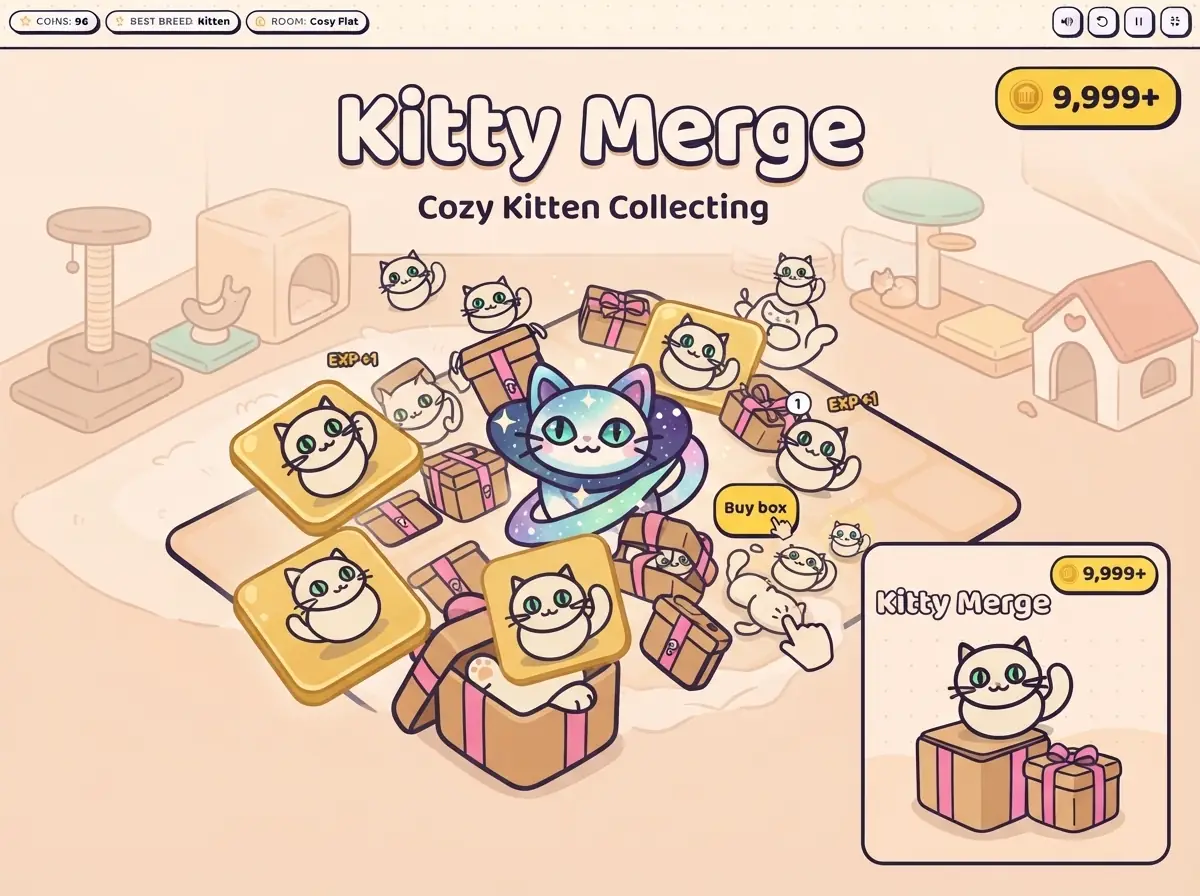
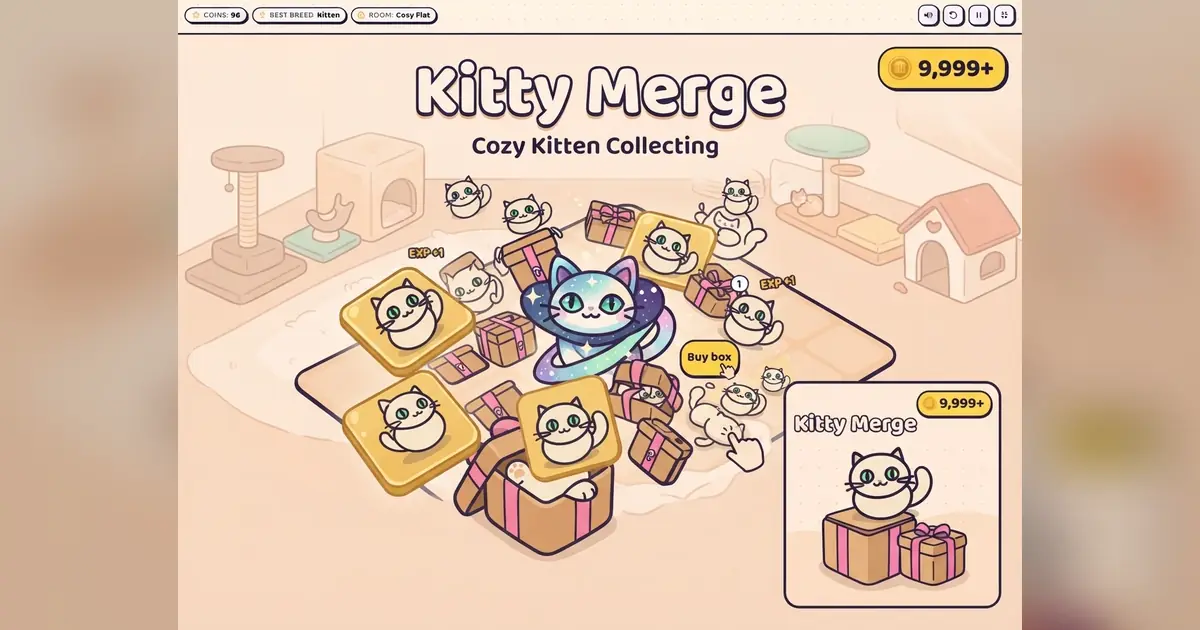
Merging is easy, but merging well takes planning. In board-style merge games like our Kitty Merge, where cat boxes keep arriving on a limited grid, you need to think about where each piece sits. Keeping free tiles open, merging low-level cats quickly and lining up pairs for the next breed separates a casual score from a great one.
This combination of easy entry and hidden depth is one of the most reliable recipes in game design. Players of any skill level can enjoy it, and experienced players always have something to improve.
A sense of order
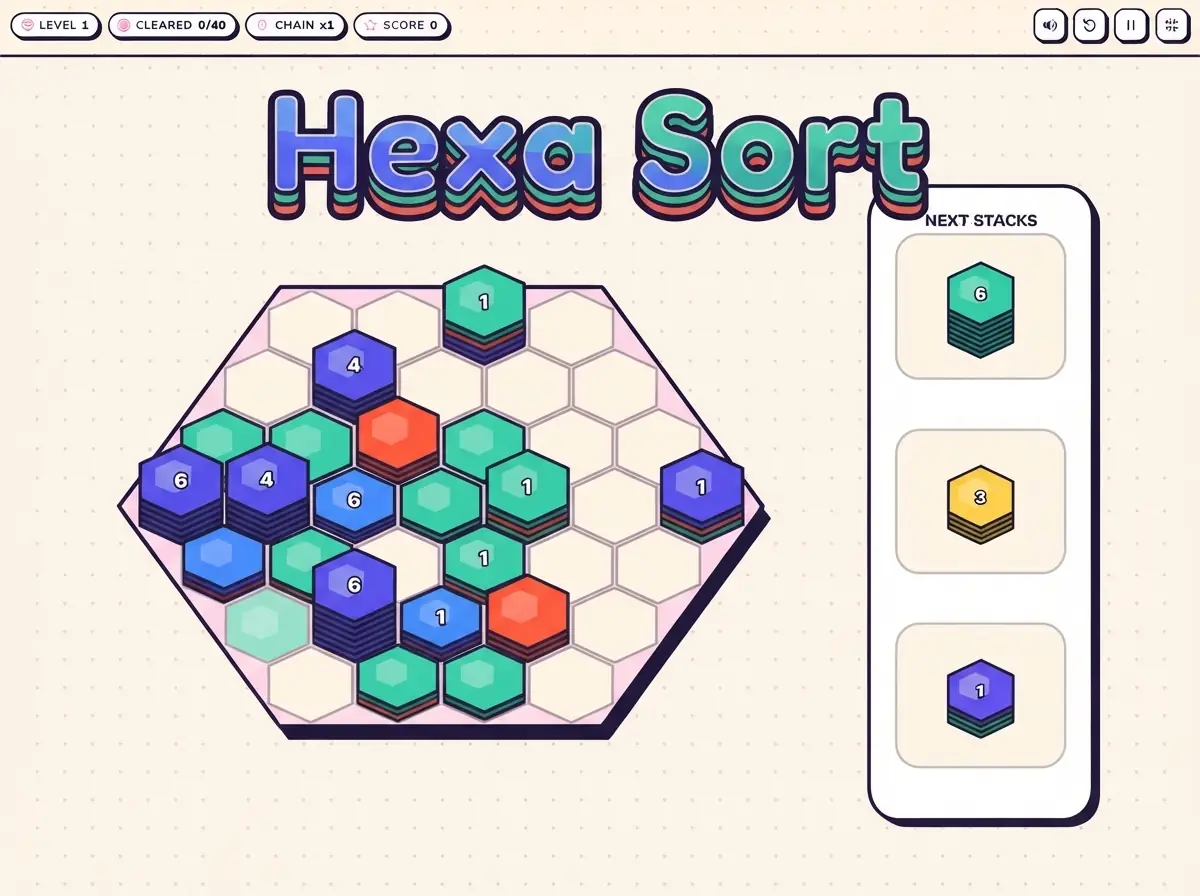
Merge games take a messy board and slowly make it tidy. That sense of creating order is naturally satisfying. It is the same feeling behind sorting games like Hexa Sort, where scattered tiles become neat, single-colour stacks.
Perfect for short sessions
A merge game can be played for one minute or thirty. There is rarely a timer, and you can usually stop at any point. That flexibility makes merging ideal for browsers and phones, where many people play in short breaks.
What makes a good merge game
If you want to judge a merge game quickly, look for:
- Clear, readable items, so you can tell what matches at a glance.
- Fair physics or placement, so outcomes feel predictable.
- A satisfying chain with enough steps to keep you curious.
- Pleasant feedback on every merge.
How that looks in Kitty Merge
Kitty Merge is the merge game on this site, and it shows the difference between a chain and a pile. Two matching cats become the next breed. If you merge every pair the moment it appears, the board fills with breeds that have no partner, and the Cosmic Cat stops being reachable. Keep one open patch for new boxes, and do not merge your best cat until a second one exists to meet it. Rush mode is the three-minute exception: there, merging immediately is correct, because the clock matters more than the layout.
Final thoughts
Merge games prove that a tiny idea, executed well, can be endlessly enjoyable. Instant understanding, frequent rewards, curiosity and a sense of order all combine into a loop that is easy to start and hard to put down. For more easy-going games, explore our Casual category.