Lights, Gates and Pipes: How to Start a Logic Puzzle Without Guessing
Light Up, Logic Gates and Pipe Rotation Deluxe punish random clicking. Here is a way to read each board so the first move is a reason, not a guess.
Guessing feels like progress in a logic puzzle because something on the board changes. It is usually the opposite. The board was one move from a clear solution, and the guess spent that move. Light Up, Logic Gates and Pipe Rotation Deluxe are three different toys with the same good habit: find the part that can only be one way, and touch that part first.
Light Up: follow one colour
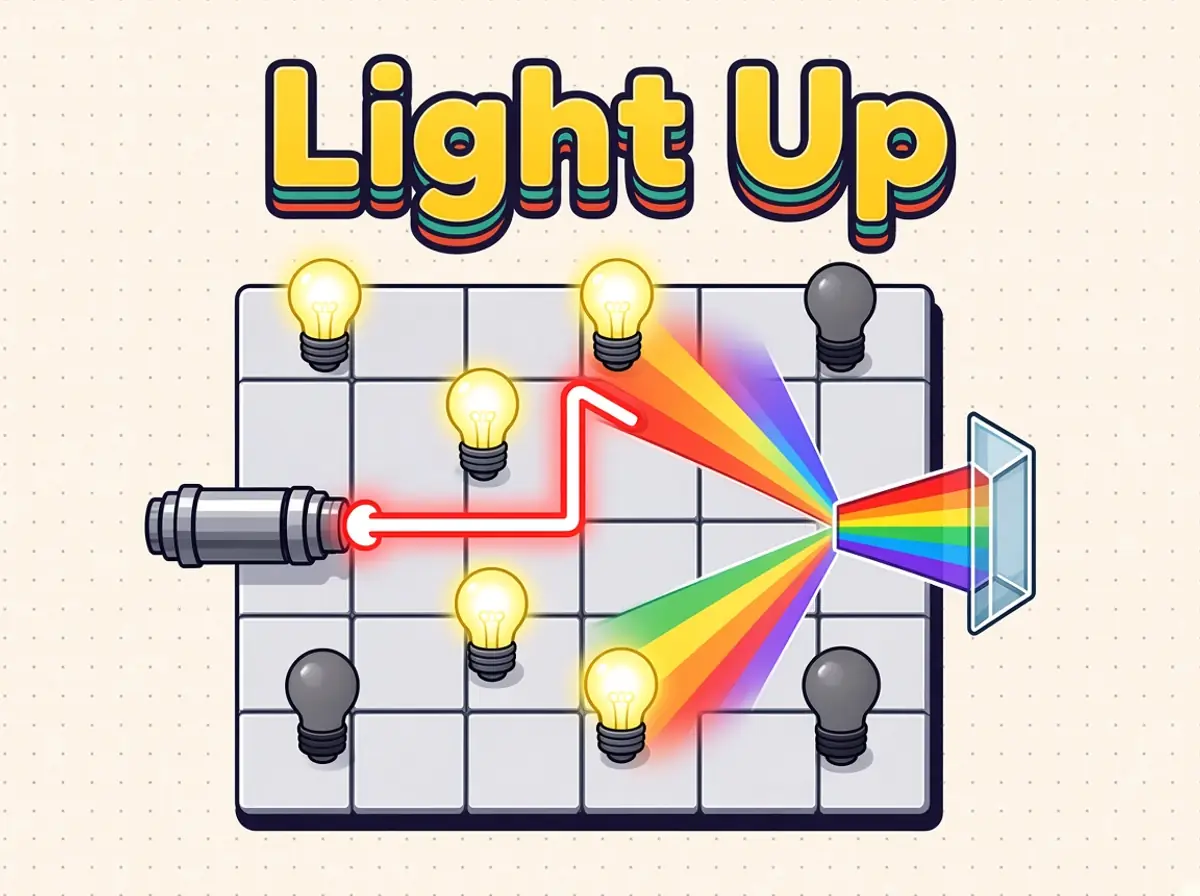
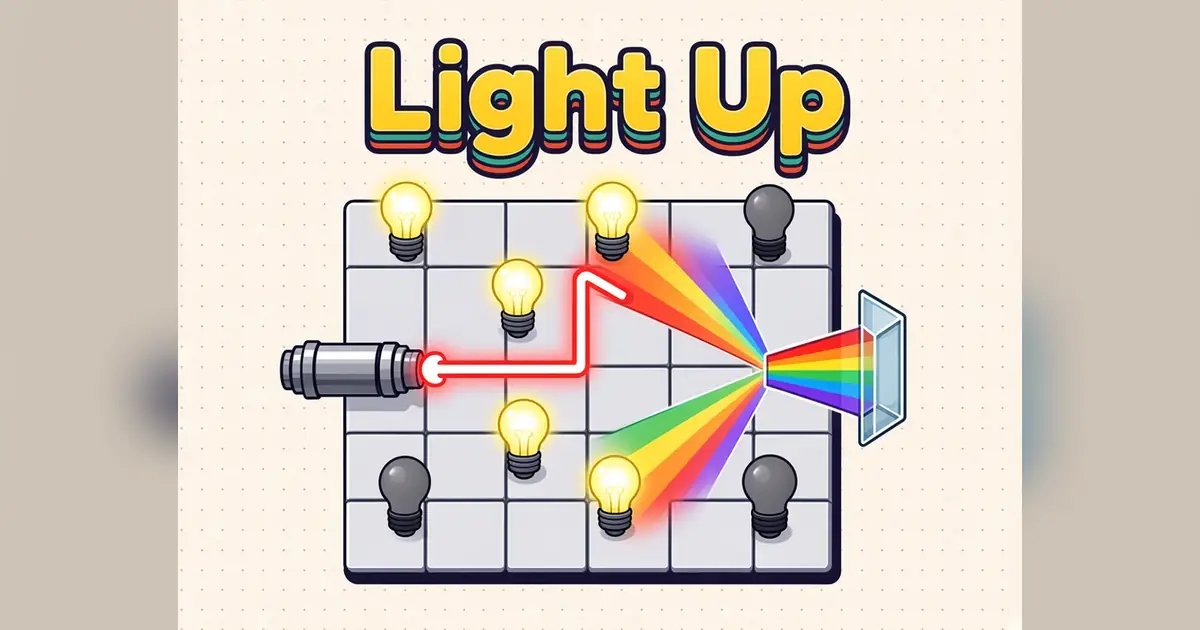
A bulb in Light Up wants a colour. If you spin mirrors before you know which colour, you are decorating. Pick one dark bulb, name the colour it needs, and find the source or filter that produces it. Only then look for the mirrors that could connect those two points.
The trap is a mirror that sits on two routes. Turning it to finish your bulb can switch off a bulb that was already correct. Before you leave a mirror, glance at every beam that touches it. If you cannot see a second beam, there may still be one behind a splitter. Splitters are the piece that makes a "simple" board stop being simple. Treat each output of a splitter as its own puzzle that happens to share a source.
When the par tap count feels mean, it is because the level was built to be read, not searched. A board you solve in twenty taps when par is eight was solved by trying. Undo back to the first mirror you turned without a reason. That is almost always where the extra taps began.
Logic Gates: say what the bulb is allowed to do
Each bulb has a target, on or off, and a gate in front of it.
- AND is on only when every input is on. One dead input is enough to turn it off.
- OR is on when any input is on. To turn it off you have to kill all of them.
- NOT flips the wire that feeds it. If you wanted off and you have on, you do not need a new switch. You need to flip the thing in front of the NOT, or add the NOT you forgot to notice.
Shared switches are the whole difficulty. A switch that feeds two gates will fix one bulb and break the other if you flip it for the first bulb alone. Set the first bulb, write down which switches you used, and read the second bulb before you change a shared one. The Logic Gates guide puts the same idea next to the board. The par score is a flip count, so every "let me just try" is a star you are spending.
Pipes: connect the drain before you get clever
Pipe Rotation Deluxe has a timer made of water. Until the water starts, turning is calm. Use that time to trace a path from the source to the drain with your eye, tile by tile, checking that each opening faces the next opening. A tile that looks right and does not connect to this path is not part of the solution yet.
Gems are optional score, and they sit on branches. Build the branch after the drain is connected. A gem route that delays the main path lets the water run into a gap, and then you are turning tiles in a hurry, which is how corners get left facing the wrong way. Corners and straight pieces are easy to confuse. Point at the opening. Do not trust the silhouette.
Once the water is moving, only turn tiles it has not reached. Turning a tile the water is already inside does not reroute the past. Long pipelines score more only when they still end at the drain. A loop that revisits a tile is a leak with extra steps.
One habit for all three
Name the constraint out loud before you touch anything. "This bulb wants blue." "This bulb must be off, and it is an OR, so both inputs have to die." "This opening has to face left." If you cannot finish the sentence, you are not ready to move that piece.