How to Beat Escape Room Games: A Clue-Hunter's Checklist
Escape room games reward careful searching and clear thinking. Use this simple checklist to find every clue, crack codes faster and use fewer hints.
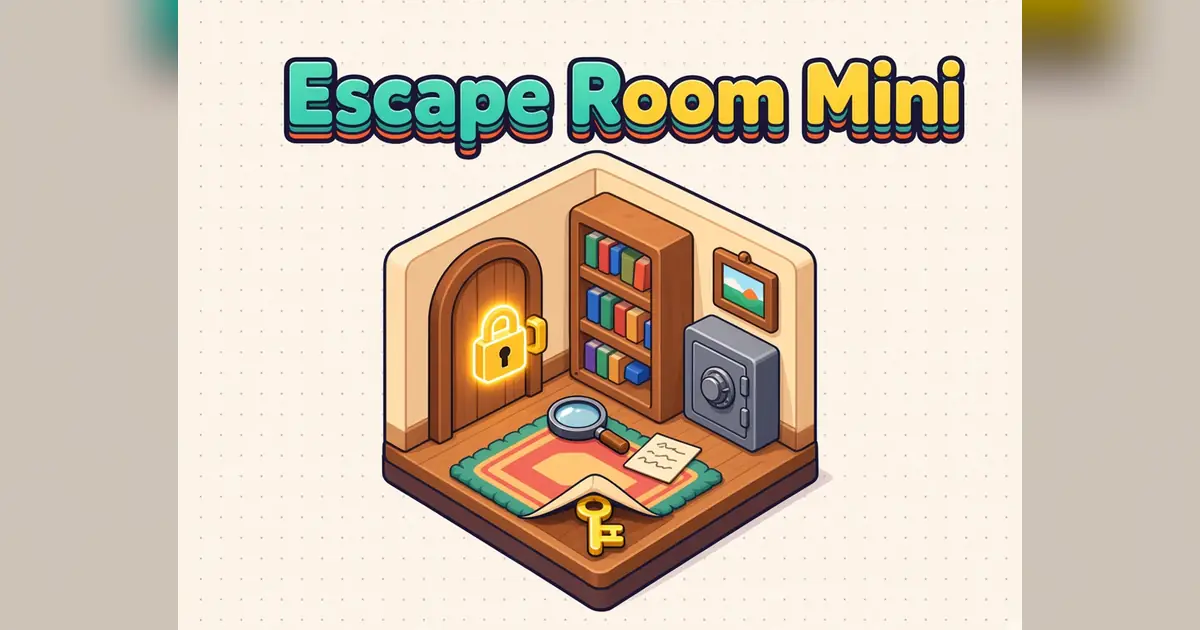
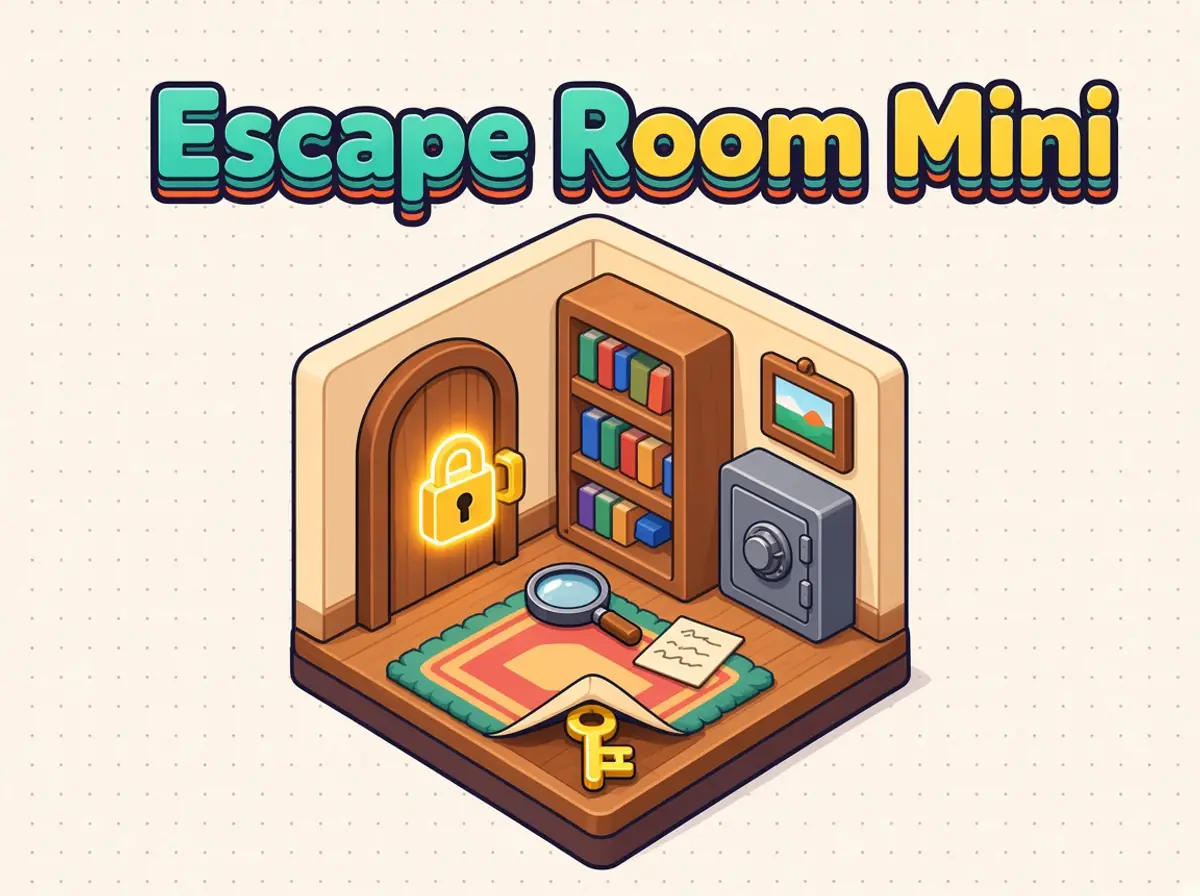
Escape room games drop you into a locked space with one job: get out. There is no fighting and no reflex test, just objects, clues and locks. That makes them perfect for players who like to think, but it can also be frustrating when you are sure you have searched everything and the door still will not open. This guide gives you a simple, repeatable way to approach any escape room game, with examples from our own Escape Room Mini.
How point-and-click escape games work
Most browser escape games follow the same pattern. You click or tap objects to examine them, which often opens a close-up view. Some objects give you items, which go into an inventory. Others hide notes, symbols or numbers. Locks, keypads and doors ask for a code or an item. Each solved lock opens a new area or reveals the next clue, until the exit opens.
Escape Room Mini works this way across three rooms: a cosy study, a dark workshop and a starry observatory. You have fifteen minutes to escape, and the codes are shuffled every game, so you cannot simply memorise the answers.
Step 1: Do a full sweep before solving anything
When you enter a new room, resist the urge to solve the first puzzle you see. Instead, click on everything once: furniture, drawers, frames, rugs, shelves and anything that looks out of place. You are building a mental list of what the room contains. Puzzles that look impossible on their own often become obvious once you know what else is in the room.
Step 2: Read every note carefully
Notes are not decoration. In well-designed escape games, a note usually tells you how to use a clue, not just that a clue exists. A short sentence about order, colour or position is often the key to a whole puzzle. Read each note twice, and come back to it when you find a new set of symbols or numbers.
Step 3: Keep track of numbers, symbols and colours
Most codes are hidden in plain sight. Look for:
- Numbers written on objects, clocks or pages.
- Symbols or marks that repeat in different places.
- Order clues, such as Roman numerals or arrows, that tell you which digit goes where.
In Escape Room Mini, for example, digits marked with Roman numerals tell you their position in a code. Writing the clues down on paper, in the order you find them, makes it much easier to put a code together.
Step 4: Use items where you find them
A common habit in escape games is carrying items around and trying them everywhere. Good puzzle design usually keeps things local: an item found in a room is normally used in that same room. In Escape Room Mini, you select an item from your inventory and then click where you want to use it. If you are stuck holding an item, look closely at the objects nearby, especially ones that looked locked, empty or broken.
Step 5: Change how you look at the room
Sometimes the clue is not hidden inside an object but in how you view the scene. Dark rooms are a good example. In Escape Room Mini's workshop, your pointer acts like a torch, so you need to move it slowly around the room to see what is there. Whenever a room behaves differently from the last one, ask yourself what new way of looking it is asking for.
Step 6: Use hints wisely
Hints are there to keep you moving, not to embarrass you. The trick is to use them at the right time. A good rule is to make a fresh full sweep of the room first, re-read the notes and only then ask for a hint. In Escape Room Mini each hint costs points, and asking for the same hint twice reveals the answer, so the first hint is best used as a gentle nudge.
Step 7: Watch the clock, but do not panic
A timer adds tension, and tension makes people click randomly. Random clicking rarely solves puzzles. If you feel stuck, stop for a moment and summarise what you know: which locks are still closed, which clues are unused and which items are still in your inventory. Usually the answer is a pairing between an unused clue and a closed lock.
The clue-hunter's checklist
- Sweep the whole room before solving anything.
- Read every note twice.
- Write down numbers, symbols and order clues.
- Use items near where you found them.
- Look at the room in a new way when it behaves differently.
- Summarise unused clues and closed locks when stuck.
- Ask for a hint only after a fresh sweep.
Why escape games are good for your brain
Escape rooms exercise several skills at once: attention to detail, memory, logical deduction and flexible thinking. You notice small things, remember where you saw them and combine them in new ways. That mix is a big part of why solving the final lock feels so rewarding.
Final thoughts
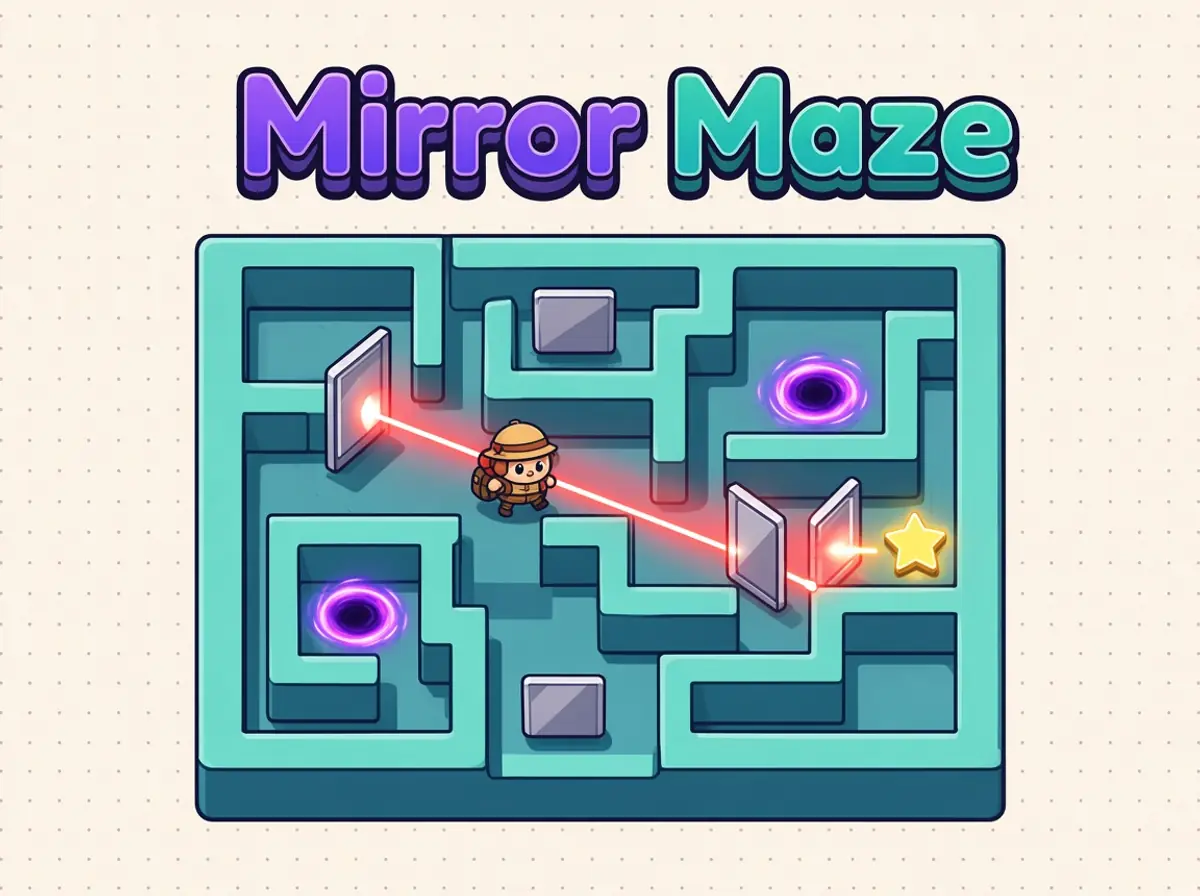
Escape room games reward patience over speed. Search everything, read carefully, keep notes and save your hints for real dead ends. If you enjoy puzzles where you have to plan your route, try steering lasers through a maze in Mirror Maze, or explore more challenges in our Puzzle and Brain categories.