Block Puzzle Games: A Beginner's Guide
New to block puzzles? Learn how the grid works, where to place awkward shapes and the simple habits that help you survive longer and score more.
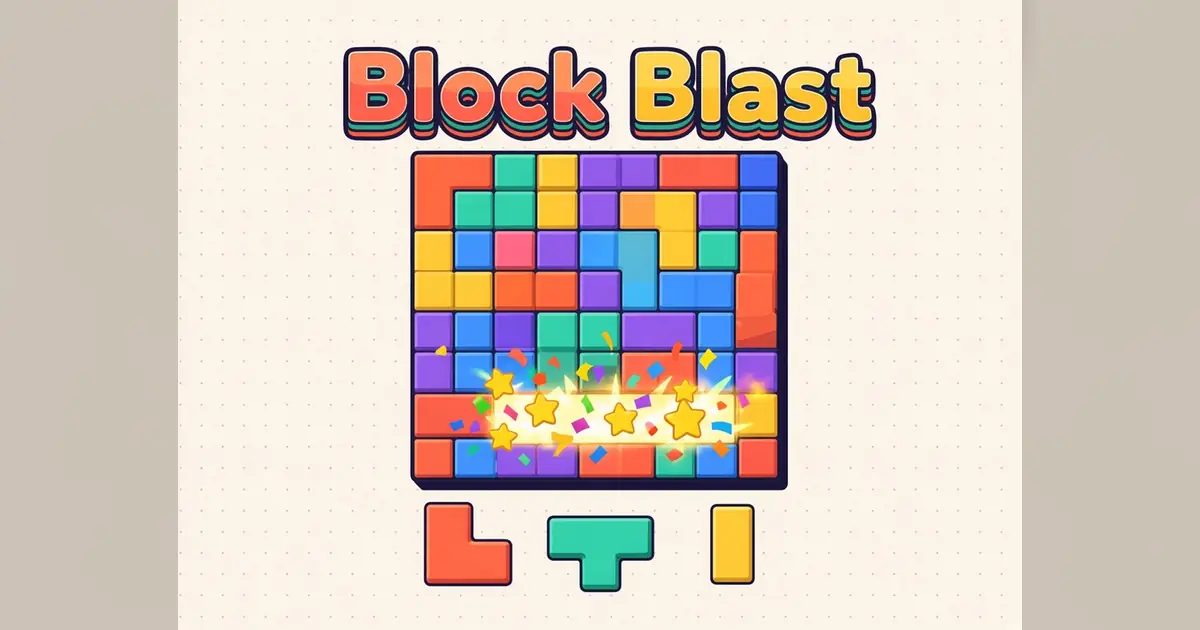
Block puzzles are one of the most relaxing game types around. You get a grid, a few shapes and one goal: fill complete rows or columns so they clear and make room. There is no timer in most versions. The only way to lose is to run out of space. This guide covers everything you need to get comfortable.
How block puzzles work
A typical block puzzle gives you three shapes at a time. You drag each shape onto the grid. When a full row or column is filled, it clears and you earn points. When you have placed all three shapes, you get three new ones. The game ends when none of your shapes fit anywhere.
Some versions add a 3x3 square that also clears when filled. Others give bonus points for clearing several lines at once, often called a combo.
Keep the board open
The most important habit is simple: keep as much open space as possible. It is tempting to place each shape wherever it fits first, but that slowly creates small holes that nothing can fill. Instead, try to keep large empty areas that can hold any shape, including the big ones.
Use the edges and corners
Edges and corners are the safest places for awkward shapes like long bars and L-shapes. Placing them against the wall means they do not cut the open area in half. Keep the centre of the board flexible for as long as you can.
Think about all three shapes
Before placing the first shape, look at all three. Is there an order that fits all of them? Sometimes placing the largest shape first is best, because it is the hardest to fit later. Sometimes a small shape can complete a line and clear space for the big one. A few seconds of planning prevents a lot of dead ends.
Aim for clears, not just placements
Every placement should ideally move you towards a clear. Rows that are nearly full are valuable: note which shapes would complete them and save those spots. Clearing two lines at once is even better, since it frees more space and usually earns bonus points.
Avoid single-cell holes
A one-cell hole surrounded by blocks can only be filled by a single square, which may not appear for a while. If you see a placement that would create one, look for an alternative.
Try a few variations
Once you are comfortable, try related games that use the same spatial thinking:
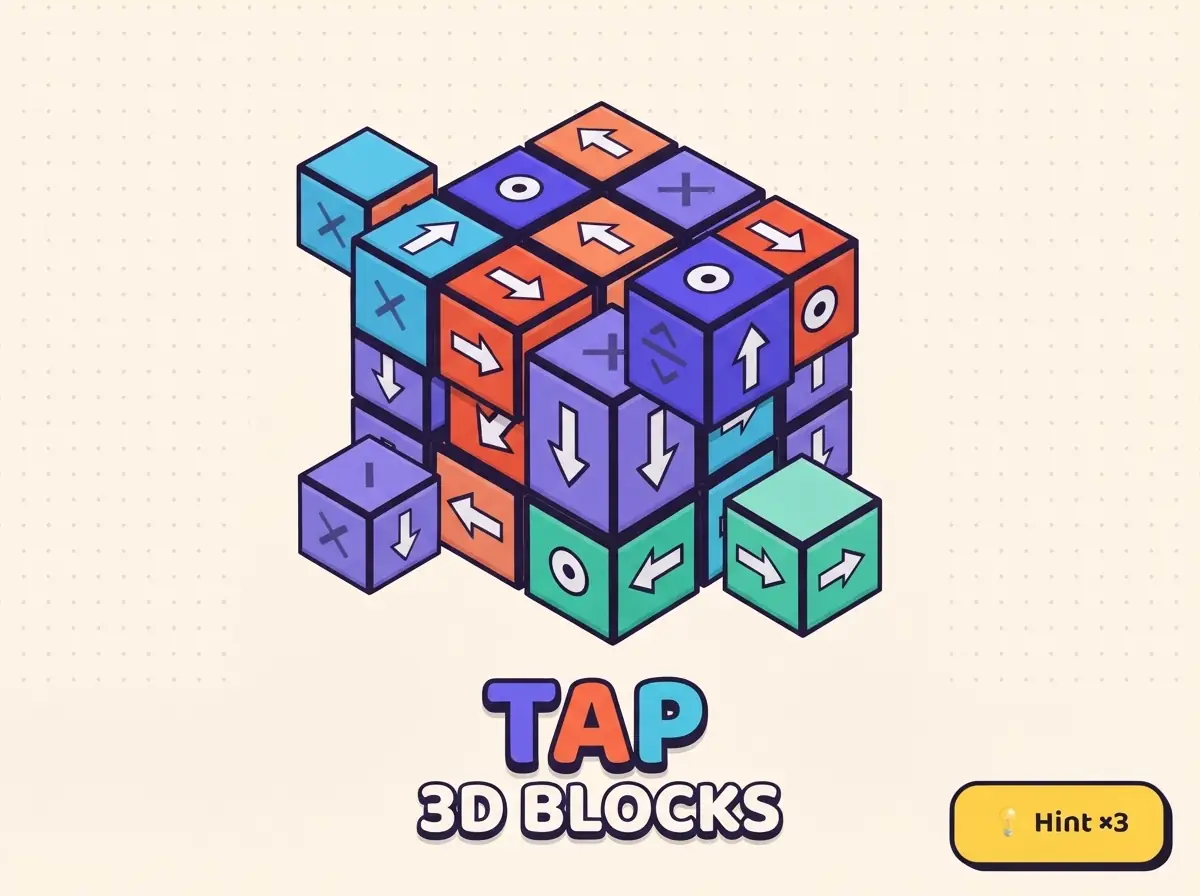
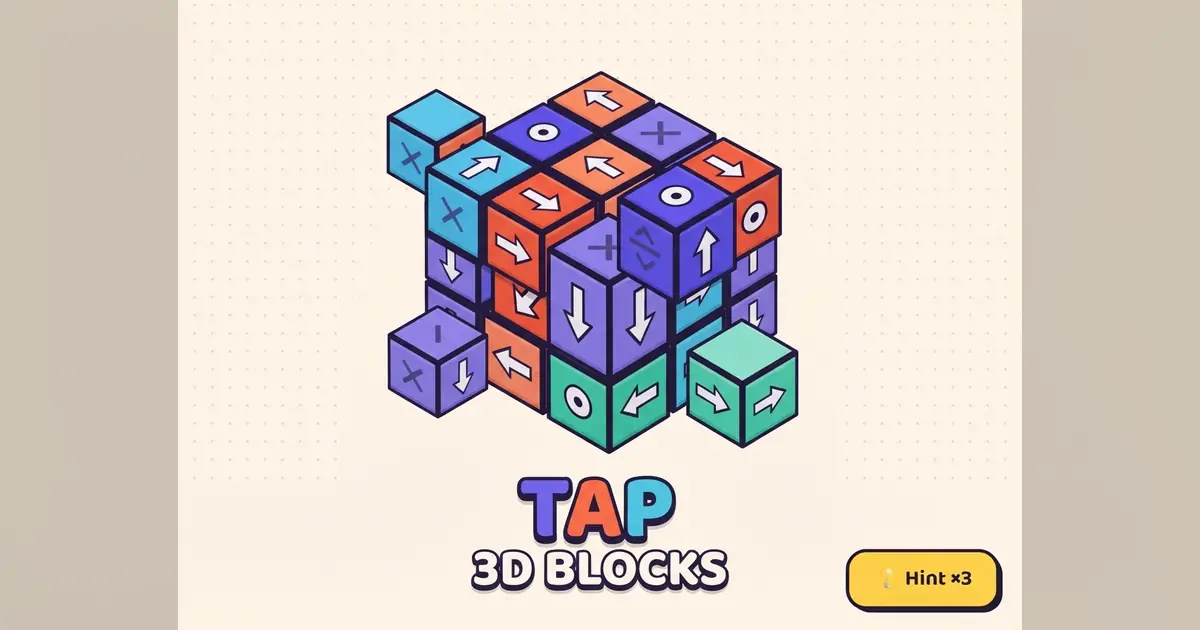
- Tap 3D Blocks turns the grid into a rotating 3D structure: instead of placing blocks, you remove them in the right order.
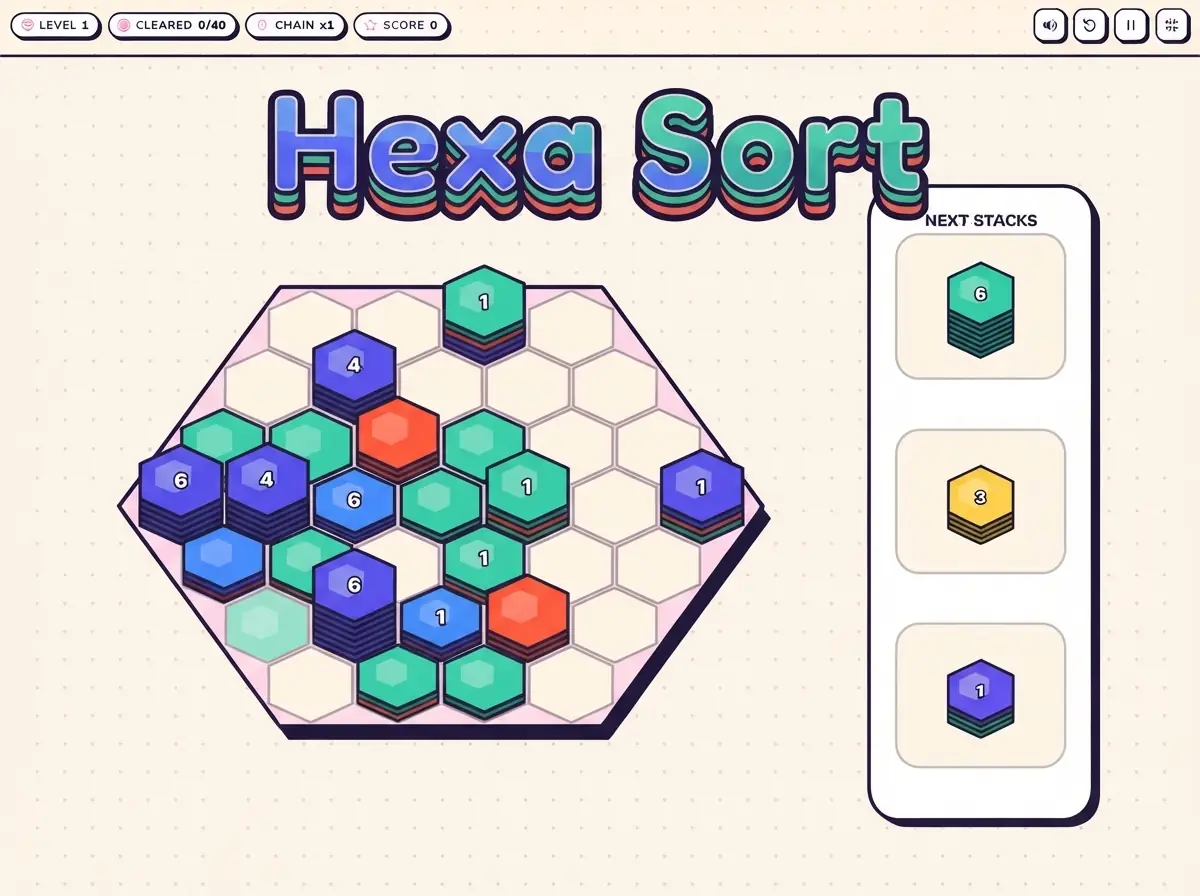
- Hexa Sort swaps squares for a honeycomb of hexagon stacks, but rewards the same "plan ahead, keep space free" mindset.
Final thoughts
Block puzzles are easy to learn and hard to put down. Keep the board open, use the edges, plan all three shapes, and you will quickly see your scores climb. When you are ready for more, browse the full Puzzle category.